
Waiting for Mortgage Rates to Drop? Here's What Could Happen Next.
Everyone's waiting for mortgage rates to drop.
But what happens when everyone decides it's finally time to make a move?
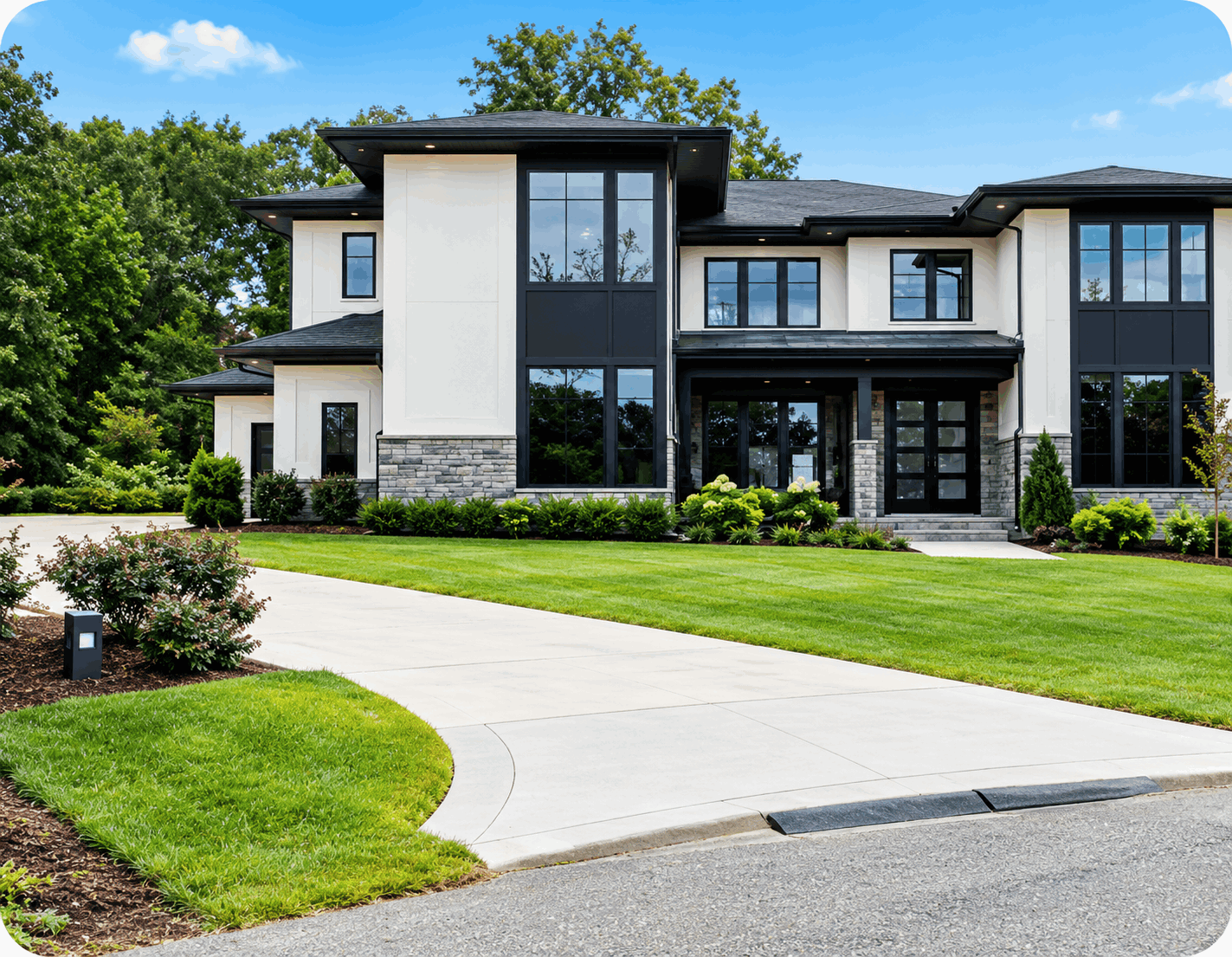
There's a familiar conversation happening in real estate right now.
"We're going to wait until rates come down."
Buyers are saying it. Homeowners considering selling are saying it. Even people who have already sold their homes and are renting while planning their next purchase are watching those mortgage rates like they're waiting for concert tickets to go on sale.
I understand the reasoning. Nobody wants to pay more to borrow money than they have to.
But here's the part of the conversation I think deserves more attention.
What happens to the housing market when all those people who've been waiting decide they're ready to buy?
Lower mortgage rates can improve affordability and bring additional buyers into the market. But they can also increase competition for the same homes, potentially pushing prices higher.
And suddenly, the opportunity everyone was waiting for might look a little different than they imagined.
A Year Can Change Quite a Bit
Let's look at what's happened with mortgage rates.
According to Freddie Mac's Primary Mortgage Market Survey, the average 30-year fixed mortgage rate was 6.27% on October 16, 2025.
One year later, on October 15, 2026, that average was 7.40%.
That's an increase of 1.13 percentage points.
For someone who spent the past year waiting for rates to decrease, the market hasn't exactly cooperated.
Now, that doesn't mean rates won't come down. They may. But mortgage rates are influenced by inflation expectations, bond markets, economic conditions, and other factors that don't follow anyone's preferred moving schedule.
And while everyone loves to speculate about what the Federal Reserve might do next, mortgage rates don't move in perfect lockstep with changes to the federal funds rate.
Waiting for lower rates is a possibility worth considering. Treating lower rates as a certainty is another matter entirely.
Source: Freddie Mac Primary Mortgage Market Survey. Figures represent national weekly averages for 30-year fixed-rate mortgages, not individual loan offers.
Lower Rates Could Bring More Buyers. And More Competition.
Imagine mortgage rates begin dropping enough to make a meaningful difference in monthly payments.
Buyers who couldn't comfortably qualify before may find themselves with more purchasing power. Others who stepped away from their home search might decide it's time to try again.
That's good news for buyer activity.
But here's where things get interesting.
If more buyers enter the market without a corresponding increase in available homes, competition can intensify.
Multiple offers may become more common. Sellers may feel more confident about their asking prices. Buyers who thought lower rates would make purchasing easier could find themselves competing against more people for the same properties.
And if that demand supports higher sale prices, some of the savings from a lower mortgage rate could disappear into the purchase price. Of course, lower rates could also encourage more homeowners to list their properties, increasing inventory and giving buyers additional choices.
Which scenario plays out depends heavily on the local market.
Lower rates don't automatically mean higher prices. But they don't guarantee a better buying opportunity, either.
A Lower Rate Doesn't Always Mean a Lower Payment
This is where I'd encourage buyers to look beyond the interest rate itself.
Let's compare two hypothetical purchases using a 30-year fixed-rate mortgage and a 20% down payment.
| Purchase scenario | Higher rate | Lower rate |
|---|---|---|
| Home price | $400,000 | $440,000 |
| Down payment (20%) | $80,000 | $88,000 |
| Loan amount | $320,000 | $352,000 |
| Interest rate | 7.40% | 6.00% |
| Monthly principal and interest | Approx. $2,215 | Approx. $2,110 |
Hypothetical illustration only. Payments are rounded and exclude property taxes, homeowners insurance, HOA dues, maintenance, and closing costs. Neither scenario represents a market forecast.
In this example, the buyer gets a substantially lower interest rate but purchases a more expensive home.
The monthly principal and interest payment decreases by only about $105, despite the rate dropping 1.40 percentage points. And the buyer needs an additional $8,000 for the down payment.
Now, I'm not suggesting home prices will increase by 10% if rates fall. These are hypothetical figures intended to show how the purchase price and mortgage rate work together.
The lesson is simple.
Don't shop for an interest rate without paying attention to what you're paying for the house.
And What About the Homeowner Waiting to Sell?
For sellers, lower mortgage rates could be welcome news.
More qualified buyers may mean greater showing activity, stronger offers, and potentially less time on the market. But I wouldn't automatically advise a homeowner to delay selling simply because rates might improve.
First, there's no guarantee of when that improvement will happen.
Second, more buyer activity doesn't necessarily mean every property will benefit equally. A beautifully maintained home in a neighborhood with limited competition may perform very differently from a property competing against several similar listings.
And third, there's the financial cost of holding the property while waiting. Mortgage payments, taxes, insurance, maintenance, and the homeowner's personal financial circumstances still matter. If you're already planning to sell, the question shouldn't simply be whether you can get a higher price six months from now.
It's whether waiting is likely to improve your overall financial outcome after accounting for the costs and risks involved.
The Triangle Isn't One Big Housing Market
This is something I wish more homeowners understood. National mortgage-rate headlines matter, but they don't tell you everything about what's happening in your neighborhood.
Raleigh, Cary, Apex, Durham, Wake Forest, Garner, and surrounding communities don't necessarily experience the same level of demand, inventory, or pricing pressure at the same time.
Even within one city, the market for a $350,000 townhome can behave differently from the market for a $750,000 single-family home.
That's why I look at actual competition, recent sales, pricing history, property condition, and how buyers are responding to comparable homes.
A national rate forecast is useful context.
It isn't a substitute for understanding the market where your property is located.
What If You Sell Now and Rent Until Rates Improve?
This is another conversation I have with homeowners, and it's one I think deserves more attention.
Some people sell their homes and choose to rent while deciding where they want to purchase next.
Maybe they're relocating. Maybe they want to explore a different neighborhood. Maybe they simply don't want to rush into another purchase while mortgage rates and household circumstances are changing. There's nothing wrong with that strategy.

Renting can give you flexibility, time to evaluate your next move, and the opportunity to make a decision without the pressure of coordinating two real estate transactions at once. But I would caution against assuming that a lower mortgage rate automatically means a better deal when you're ready to buy again.
Future home prices, competition, financing terms, and your own financial position will all influence that decision. The benefit of renting isn't that you're guaranteed to time the market perfectly.
It's that you may have the freedom to make your next purchase when the circumstances are right for you.
If you're exploring that option, you can browse available rental homes throughout the Triangle.
So, Should You Wait for Mortgage Rates to Drop?
Maybe. But I'd want to understand what you're waiting to accomplish.
Are you hoping for a more affordable monthly payment? A higher selling price? More available homes? Less competition? A stronger financial position before purchasing again?
Those are different goals, and they don't all respond to changing mortgage rates in the same way.
Before making a decision, I'd rather look at the numbers we can evaluate today than build an entire strategy around a rate nobody can promise tomorrow.
The lowest mortgage rate doesn't necessarily create the best real estate opportunity. The right decision is the one that makes sense when the price, payment, timing, and your financial circumstances come together.
At Auralia Residential, I help clients throughout the Greater Raleigh-Durham Triangle navigate buying, selling, and leasing decisions with an understanding of how those choices affect one another.
If you're weighing your options, let's talk about your next move and what makes sense for your circumstances.
Tamisha Lane
Broker/Owner | Auralia Residential
With more than 17 years of real estate experience, Tamisha helps homeowners, buyers, and residents throughout the Greater Raleigh-Durham Triangle navigate residential sales, leasing, relocation, and investment property decisions.
From The Auralia Journal, an Auralia Residential publication.
Categories
- All Blogs (53)
- 27511 Rentals (1)
- 27529 Rentals (1)
- 27539 Rentals (1)
- 27560 Rentals (1)
- 27603 Rentals (1)
- 27610 Rentals (2)
- 27613 Rentals (1)
- 27616 Rentals (1)
- 27713 Rentals (1)
- 5401 North (2)
- 55 at the Park (1)
- Addison Reserve (1)
- Apex Real Estate (1)
- Apex Rentals (2)
- Assumable Mortgage (1)
- Auralia Residential (7)
- Auralia Residential News (14)
- Available Rentals (20)
- Breckenridge (1)
- Brook Forest Townhomes (1)
- Buyer Resources (2)
- Buyers (1)
- Cary Rentals (1)
- Clayton Homes For Sale (1)
- Clayton NC Rentals (1)
- Clayton Real Estate (1)
- Downing Village (1)
- Durham Rentals (2)
- Edge of Auburn (1)
- Elm Grove (1)
- First-Time Home Buyers (2)
- Flowers Plantation (1)
- For Rent in Cary (1)
- For Rent in Garner (1)
- For Rent in Raleigh (1)
- Garner NC Rentals (2)
- Holding Village (1)
- Homeownership & Financial Decisions (2)
- Homes for Rent (12)
- Homes for Rent in Apex (1)
- Homes for Rent in Clayton NC (1)
- Homes for Rent in Morrisville (1)
- Homes For Sale (2)
- HVAC Maintenance Tips (1)
- Investment & Development Trends (3)
- Investment Trends (1)
- Johnston County Real Estate (1)
- Johnston County Rentals (1)
- Knightdale Rentals (2)
- Lakemont (1)
- Landlord Legal & Compliance (1)
- Landlord Strategy (1)
- Landlord Strategy & Operations (4)
- Living in the Triangle (5)
- Magnolia Park (3)
- Market Insights (4)
- Meadow View (1)
- Mica Ridge (1)
- Midtown Raleigh Living (1)
- Morrisville Rentals (3)
- Move-In Ready Homes (3)
- New Construction (1)
- New Kent Village (2)
- North Carolina Living (5)
- North Raleigh Rentals (1)
- Policy & Regulatory Updates (2)
- Policy & Regulatory Updates Landlord Strategy & Operations (1)
- Pool Community (1)
- Preventative Maintenance (1)
- Property Management (3)
- Raleigh Lifestyle (1)
- Raleigh Property Management (1)
- Raleigh Rentals (8)
- Real Estate Investing (1)
- Relocating to Cary NC (1)
- Relocating to Morrisville (1)
- Relocating to NC (6)
- Relocating to Wake Forest (1)
- Relocation to Durham (2)
- Rental Homes (3)
- Rental Listings (3)
- Rental Search Advice (1)
- Rentals in 27609 (2)
- Rentals Near Me (2)
- Resident Resources (3)
- Royal Creek Rentals (1)
- RTP Living (2)
- Seasonal Home Tips (1)
- Sell or Rent? (1)
- Sellers (4)
- Series: The Cost of Holding On (2)
- Shepard's Park (1)
- Single Family Homes (7)
- Stoneriver (1)
- Student Housing (1)
- Tenant Resources (5)
- The Lakes at Rolesville (1)
- The Villages at Independence Park (1)
- Townes at North Salem (1)
- Townhomes (1)
- Townhomes For Rent (6)
- Townhomes for Rent in Morrisville (1)
- Trace at Olde Towne (2)
- Triangle Real Estate (2)
- Triangle Rentals (3)
- Tyler Run (1)
- Upgrading from Apartment Living (3)
- Wake County Communities (1)
- Wake County Homes (1)
- Wake Forest LIving (1)
- Wake Forest Rentals (3)
- What’s New at Auralia (13)
- Whitley Corner (1)
- Zebulon Real Estate (1)
Recent Posts

GET MORE INFORMATION